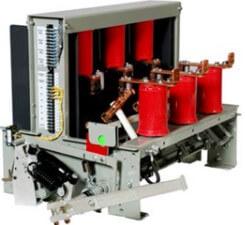
Mining environments aren't just tough; they are relentless. When you are operating deep underground or at a massive surface site, your gear is fighting a constant war against pervasive dust, localized moisture, and heavy-duty vibration. In this grit-filled reality, the vacuum circuit breaker serves as the ultimate gatekeeper, snapping shut to kill fault currents before they vaporize your uptime or endanger your crew.
Key Takeaways
- Regulatory Rigor: Compliance with IEC 62271 and MSHA isn't a suggestion—it’s the difference between a safe shift and a catastrophic failure.
- Rapid Response: Vacuum technology is king in the pits because it kills arcs in a sealed chamber, preventing ignition in volatile atmospheres.
- Mechanical Grit: Mining-grade breakers must survive G-force levels of vibration that would shake standard industrial units to pieces.
- Uptime Assurance: Proper standard adherence drastically slashes the risk of arc flash hazards and expensive conveyor motor burnouts.
Why Are Standards Critical For A Vacuum Circuit Breaker In Mining?
Standards are the engineering backbone that prevents electrical faults from turning into mine-wide disasters. In the high-stakes environment of a mining site, a vacuum circuit breaker must provide a guaranteed "last line of defense" against short circuits and surges. Without these rigorous benchmarks, equipment would succumb to the crushing physical stress of the mine, leading to uncontained arcs, equipment fires, and life-threatening power failures in ventilation or hoisting systems.
The Strategic Framework for Power Protection
- Fault Identification: The system monitors for current spikes that indicate a short or a stalled motor.
- Instantaneous Isolation: The breaker snaps open in milliseconds, drawing the arc into a specialized vacuum bottle.
- Arc Extinction: Because there is no medium to conduct electricity in a vacuum, the arc collapses instantly upon the first current zero.
- System Recovery: Once the fault is cleared, the unit allows for a rapid reset, minimizing the "dead time" on your production line.
GET IN TOUCH
In a hurry? Call us at 276-285-3841
Which Core Regulations Govern The Vacuum Circuit Breaker?
The primary global and domestic authorities are the IEC 62271 series and MSHA safety mandates. These frameworks dictate every detail of the vacuum circuit breaker, from its insulation strength and short-circuit breaking capacity to its mechanical endurance cycles. While the IEC 62271-100 focuses on the technical performance of the arc interruption, MSHA (Mine Safety and Health Administration) adds an extra layer of grit, ensuring the housing can withstand gassy, explosive environments common in coal or deep-rock mining.
Contextual Topic Clusters: Mining Execution
- Operational ROI: Using sealed vacuum interrupters means less downtime for contact cleaning and zero risk of oil leaks.
- Personnel Safety: Fast-acting breakers reduce the "Incident Energy" during an arc flash, keeping your electricians out of the burn unit.
- Technical Integration: These units are built to slide into mobile power skids that move with the face of the mine.
How Does The Vacuum Circuit Breaker Outperform Other Technologies?
Vacuum tech wins in the mines because it is faster, cleaner, and more durable than air or oil alternatives. When a vacuum circuit breaker operates, the arc is extinguished within a hermetically sealed chamber, meaning no external dust or methane can get inside to compromise the contact points. This "sealed-for-life" design is a game-changer for underground maintenance teams who don't have the time or the clean environment required to service old-school air-magnetic breakers or messy oil-filled switches.
At-a-Glance: Technology Comparison
|
|
|
|
|
|
|
|
|
|
|
|
|
|
|
|
|
|
|
|
GET IN TOUCH
In a hurry? Call us at 276-285-3841
What Technical Specs Define Mining-Grade Durability?
Mining-grade equipment is over-engineered to handle "High-Interrupting Capacity" and extreme mechanical shocks. We aren't talking about a clean server room; we are talking about a breaker sitting next to a vibrating rock crusher. Every component must be rated for "Mechanical Durability," meaning it can cycle thousands of times without the vibration loosening the primary bus connections or the control wiring.
- Sealed Interrupter: A vacuum-tight bottle that prevents localized humidity from causing internal tracking.
- Galvanized Housing: Heavy-duty steel enclosures that resist the corrosive effects of mine water.
- Vibration Dampening: Specialized mounting points designed to isolate the sensitive trip units from heavy machinery tremors.
- Fault Tolerance: The ability to withstand massive kA (kiloamp) ratings without the housing deforming.
Expert Perspective: The Pro-Tip
The "Hidden" Maintenance Killer: In my years on site, I’ve seen more breakers fail due to "dust-creep" in the control wiring than actual contact wear. Even though the vacuum bottle is sealed, you must ensure your secondary terminal blocks are tightened every quarter. The vibration from a nearby hoist can back those screws out just enough to cause a nuisance trip that shuts down your entire shift.
Take the Next Step Toward Uninterrupted Power
At Becker Mining USA, we don't just sell parts; we build the nervous system of your mine. Our engineered solutions are forged in the reality of the American mining industry, ensuring your vacuum circuit breaker is compliant, resilient, and ready for the most demanding shifts.
Ready to secure your uptime?
- Review your current fault-study data.
- Audit your aging switchgear for compliance gaps.
- Call Becker Mining USA to schedule a technical site evaluation today.
Frequently Asked Questions
Q: What is a vacuum circuit breaker used for in mining?
A: It acts as the primary protection device in medium-voltage networks, clearing electrical faults instantly to protect high-value assets like conveyors and ventilation fans.
Q: Why is vacuum technology better than oil breakers for underground use?
A: Vacuum units eliminate the risk of oil-fed fires and require significantly less maintenance, which is vital when working in cramped underground substations.
Q: How does MSHA influence breaker selection?
A: MSHA sets the safety bar for explosion-proof enclosures and ignition prevention, ensuring the breaker won't spark a disaster in gassy or dusty conditions.
Q: How often should I inspect my mining switchgear?
A: While the vacuum interrupters are low-maintenance, the mechanical linkages and control circuits should be inspected every 6 to 12 months, depending on the vibration levels.
Q: Can these breakers handle 15kV mining networks?
A: Yes, vacuum technology is the industry standard for 6kV to 15kV distribution, providing the high-interrupting capacity needed for large-scale mining power skids.
Products We Offer:
- Explosion Proof Equipment
- Transformers
- Arc Guard
- Longwall Electrical Systems
- Capacitor Trip Devices
- Electrical Equipments like capacitor banks, switch houses, junctions, and splice boxes.
Power up your productivity with Becker Mining's ground fault relays - the reliable and efficient solution for all your power distribution needs. Call us today!
GET IN TOUCH
In a hurry? Call us at 276-285-384