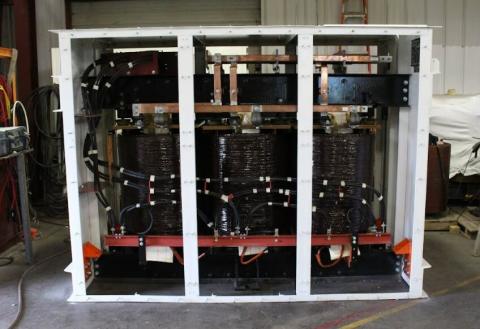
Mining operations across the United States demand relentless electrical infrastructure to maintain continuous, safe production. Integrating a reliable heavy duty transformer into your site's electrical grid protects expensive machinery, powers underground ventilation, and prevents million-dollar operational halts. Without specialized transformer units built for abusive environments, active mines face constant equipment damage, sudden arc-flash hazards, and crushing productivity loss.
Key Takeaways
- Severe Duty Engineering: Purpose-built frames resist intense mechanical vibration, airborne coal dust, and harsh sub-surface humidity.
- Maximum Uptime: Prevents erratic voltage sags that trip high-horsepower crushers and haulage systems.
- Enhanced Safety Standards: Delivers clean, isolated power to critical life-support and emergency monitoring networks.
- Modern Grid Readiness: Bridges legacy site distribution with modern battery electric vehicle (BEV) charging infrastructure.
Why Do Modern Mine Sites Require Custom Heavy-Duty Transformer Systems?
Standard commercial distribution units shatter under the physical abuse and massive electrical loads of active extraction sites. Continuous duty cycles demand ruggedized transformer housing, heavy-gauge copper windings, and advanced thermal dissipation to handle non-stop operations. When primary breakers trip underground, entire shifts stall.
Mining operations run massive machinery that spikes current during initial start-up. Standard commercial gear simply burns out under those repetitive surges. Real-world mine conditions push electrical components far past normal factory limits every single hour.
- Overcome high-load startups on long overland belt conveyors.
- Shield delicate control circuits from harsh voltage spikes.
- Protect internal core assemblies against persistent diesel blast vibrations.
- Prevent early insulation breakdown caused by localized high-ambient pit temperatures.
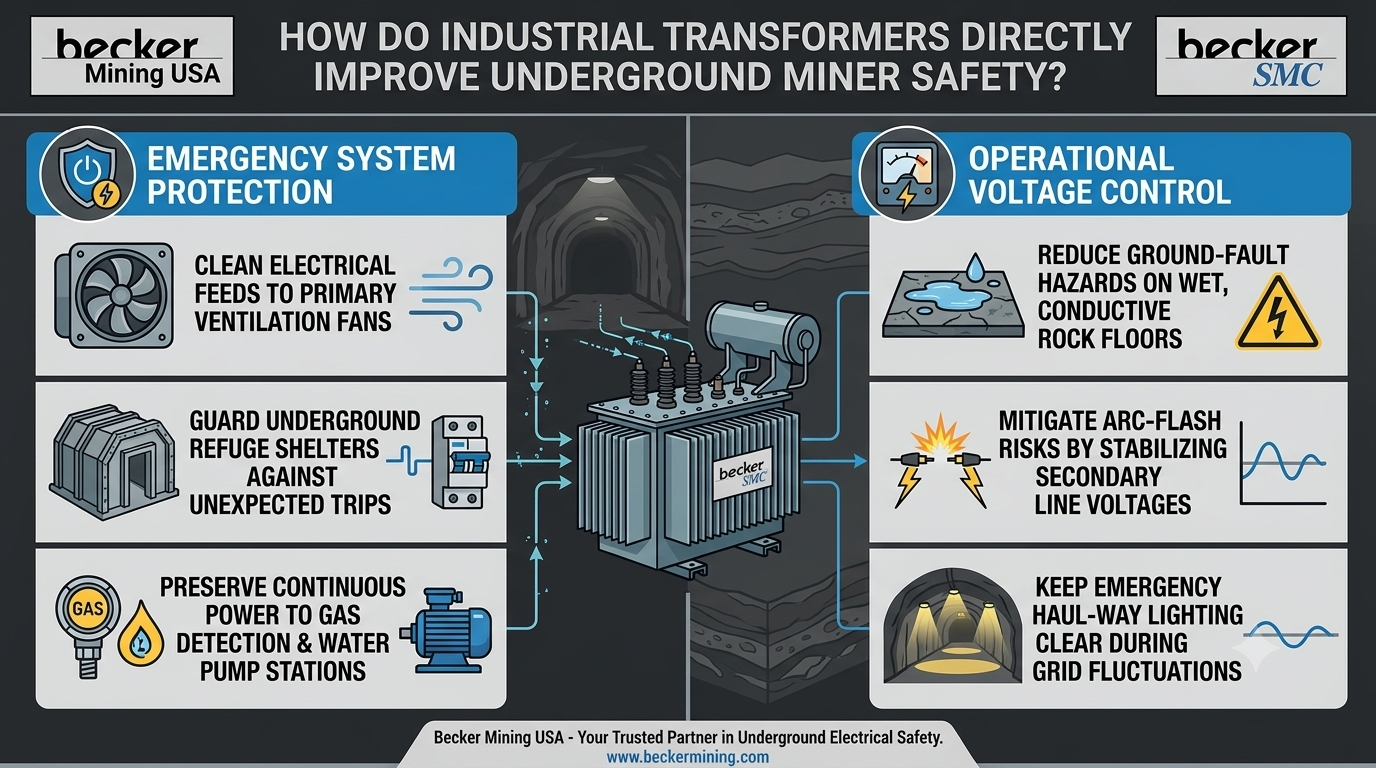
How Do Industrial Transformers Directly Improve Underground Miner Safety?
Sub-surface safety systems rely on uncompromised, isolated power delivery to keep air flowing and haulage routes lit. A custom heavy-duty transformer insulates critical life-safety networks from the violent harmonic distortion generated by heavy cutting heads and deep-hole drilling rigs down below. Continuous power delivery keeps volatile atmospheric gases moving out of active working faces.
The reality on the ground is simple: when the electrical supply fluctuates, safety gear fails first. Underground teams depend entirely on continuous monitoring to detect methane accumulation and maintain emergency communication channels back to the surface portal.
Emergency System Protection
- Deliver clean electrical feeds to critical primary ventilation fans continuously.
- Guard underground refuge shelters against unexpected main circuit breaker trips.
- Preserve continuous power to hazardous gas detection and automated water pumping stations.
Operational Voltage Control
- Reduce ground-fault hazards across wet, highly conductive rock floors.
- Mitigate arc-flash risks by stabilizing secondary line voltages.
- Keep emergency haul-way lighting clear during heavy grid fluctuations.
GET IN TOUCH
In a hurry? Call us at 276-285-3841
How Does Upgrading Power Infrastructure Prevent Costly Unplanned Downtime?
Upgrading to application-engineered power systems eliminates micro-outages, limits thermal stress, and extends machine operating lifespans. Unplanned site stops cost operations thousands of dollars every minute that equipment sits idle. Proactive power management isolates electrical faults before they cascade through the entire mine grid.
- Conduct Field Voltage Load Analysis
- Identify extreme harmonic distortions created by variable frequency drives.
- Map sudden voltage drops across long trailing cables running to deep working faces.
- Deploy Heavy-Duty Transformer Assemblies
- Install custom-wound units rated for harsh, continuous duty cycles.
- Connect shock-mounted enclosures to absorb heavy surface blasting impacts.
- Establish Automated Condition Monitoring
- Track oil temperature and gas buildup inside fluid-filled transformers in real time.
- Set up predictive thermal imaging schedules to catch hot spots before insulation breakdown occurs.
Where Commercial Gear Fails in Industrial Extraction Sites
- Surface Processing Plants: Extreme particulate exposure in rock crushing and mill circuits regularly clogs standard radiator fins, leading to rapid thermal breakdown.
- Underground Coal and Hard-Rock Shafts: Confined spaces and humid atmospheric conditions rot light-duty steel enclosures, causing sudden ground faults in secondary distribution lines.
- High-Output Electrified Extraction Zones: Rapid cycle changes from high-draw electric excavators create massive voltage fluctuations that ruin standard commercial coils within months.
Core Operational Differences: Standard Commercial vs. Heavy-Duty Mining Transformers
|
|
|
|
|
|
|
|
|
|
|
|
|
|
|
|
|
|
|
|
|
|
|
|
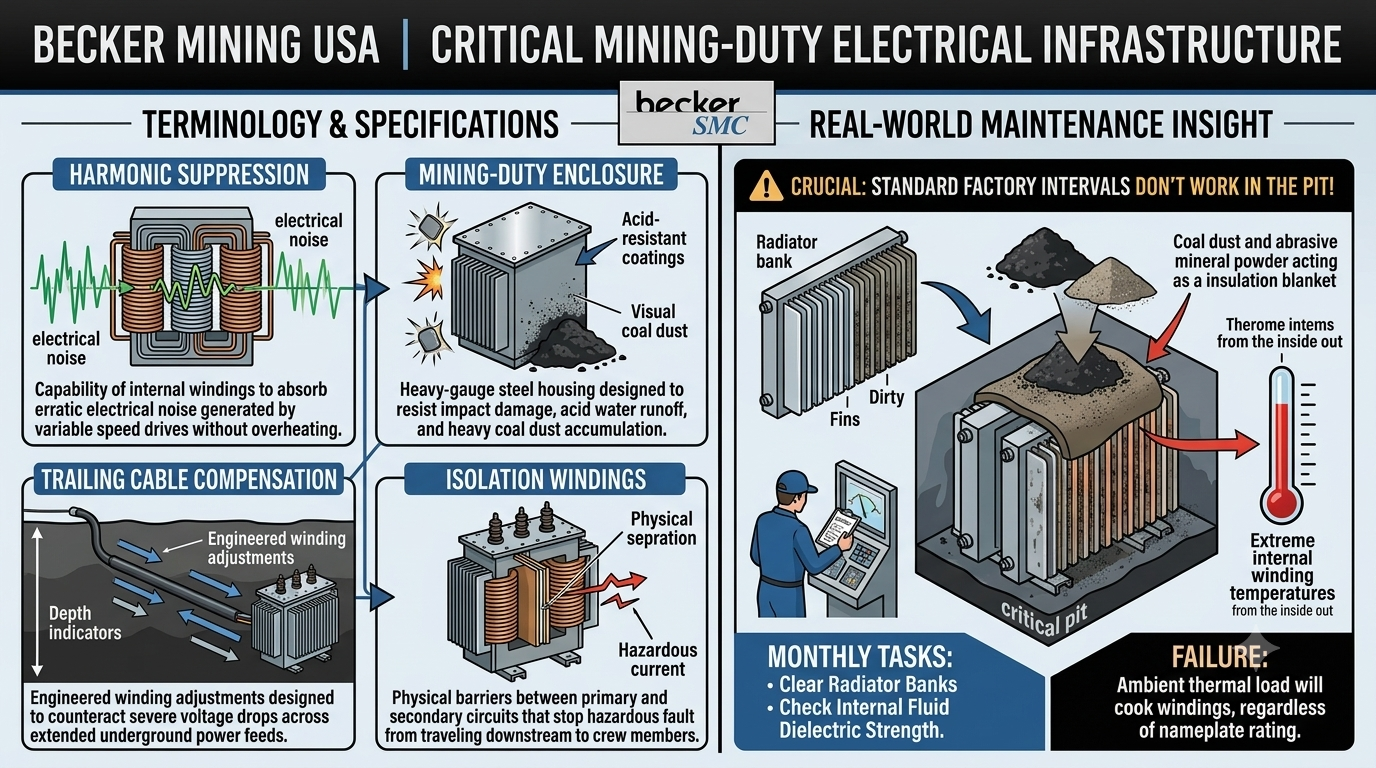
Critical Infrastructure Terminology
- Harmonic Suppression: The capability of internal transformer windings to absorb erratic electrical noise generated by variable speed drives without overheating.
- Mining-Duty Enclosure: A heavy-gauge steel housing designed to resist impact damage, acid water runoff, and heavy coal dust accumulation.
- Trailing Cable Compensation: Engineered winding adjustments designed to counteract severe voltage drops across extended underground power feeds.
- Isolation Windings: Physical barriers between primary and secondary circuits that stop hazardous fault currents from traveling downstream to crew members.
Real-World Maintenance Insight
Here's the part most vendors won't tell you: standard factory maintenance intervals don't work down in the pit. Coal dust and abrasive mineral powder act like insulation blankets over cooling fins. If you aren't clearing radiator banks and checking internal fluid dielectric strength monthly, ambient thermal load will cook your windings from the inside out—regardless of your nameplate rating.
GET IN TOUCH
In a hurry? Call us at 276-285-3841
Action Plan for Grid Optimization
- Evaluate Current Transformer Loading: Measure thermal signatures and harmonic loads across your active distribution network to identify high-risk gear.
- Specify Heavy-Duty Step-Down Equipment: Select custom-engineered units matched to your site's specific physical constraints and load spikes.
- Integrate Precision Protection Gear: Install advanced ground-fault interrupters and automated thermal sensors to defend your new transformer installation.
Upgrade Your Power Grid with Becker Mining USA
Upgrading your electrical infrastructure with a high-capacity heavy duty transformer protects your crew, secures continuous production, and stops profit-killing downtime. Becker Mining USA engineers high-performance power solutions tested in the harshest surface and underground environments nationwide. Call Becker Mining USA today or submit a custom spec request online to speak with our engineering team directly.
Frequently Asked Questions
Q: What Makes A Heavy Duty Transformer Different From Standard Commercial Units?
A: A heavy-duty mining unit features reinforced steel construction, specialized vibration isolation, and high-margin copper windings. These engineering choices allow the unit to run continuously under severe electrical harmonics, heavy dust, and physical shock without failing.
Q: How Do Transformers Improve Worker Safety In Underground Mines?
A: They isolate high-voltage primary feeds and supply steady power to critical safety infrastructure. This prevents sudden power losses to emergency lighting, atmospheric gas monitors, underground refuge shelters, and primary ventilation fans.
Q: Why Do Mining Variable Frequency Drives Require Specialized Transformers?
A: Variable frequency drives generate high harmonic noise that causes standard commercial transformer cores to overheat rapidly. Specialized mining units use custom winding configurations and elevated K-factor ratings to neutralize these harmonic currents safely.
Q: How Does Proper Transformer Selection Reduce Site Maintenance Costs?
A: Choosing a transformer built for harsh environments prevents insulation thermal breakdown, avoids sudden arc-flash incidents, and limits line-voltage sags. This protects down-line motors and cutting gear, significantly extending overall equipment service life.
Q: What Transformer Specs Are Needed To Support Mine Electrification?
A: Electrified mines require high-capacity transformers with flexible voltage tap changers, high surge tolerance, and fast thermal dissipation. These specs ensure the system can handle rapid load swings from heavy battery-electric vehicle chargers and automated haulage setups.
Products We Offer:
- Explosion Proof Equipment
- Transformers
- Arc Guard
- Longwall Electrical Systems
- Capacitor Trip Devices
- Electrical Equipments like capacitor banks, switch houses, junctions, and splice boxes.
Power up your productivity with Becker Mining's ground fault relays - the reliable and efficient solution for all your power distribution needs. Call us today!